Author: Gandhar Desai

  • The Modi government confronting agricultural reform

    The Modi government confronting agricultural reform

    In September the Indian government led by Prime Minister Narendra Modi passed three bills aimed at liberalising agriculture. The laws deregulate trade in agricultural produce and facilitate private investment. Experts have welcomed the reforms in the abysmally unproductive sector that employs over half of India’s workforce but contributes to less than 18 per cent of GDP.

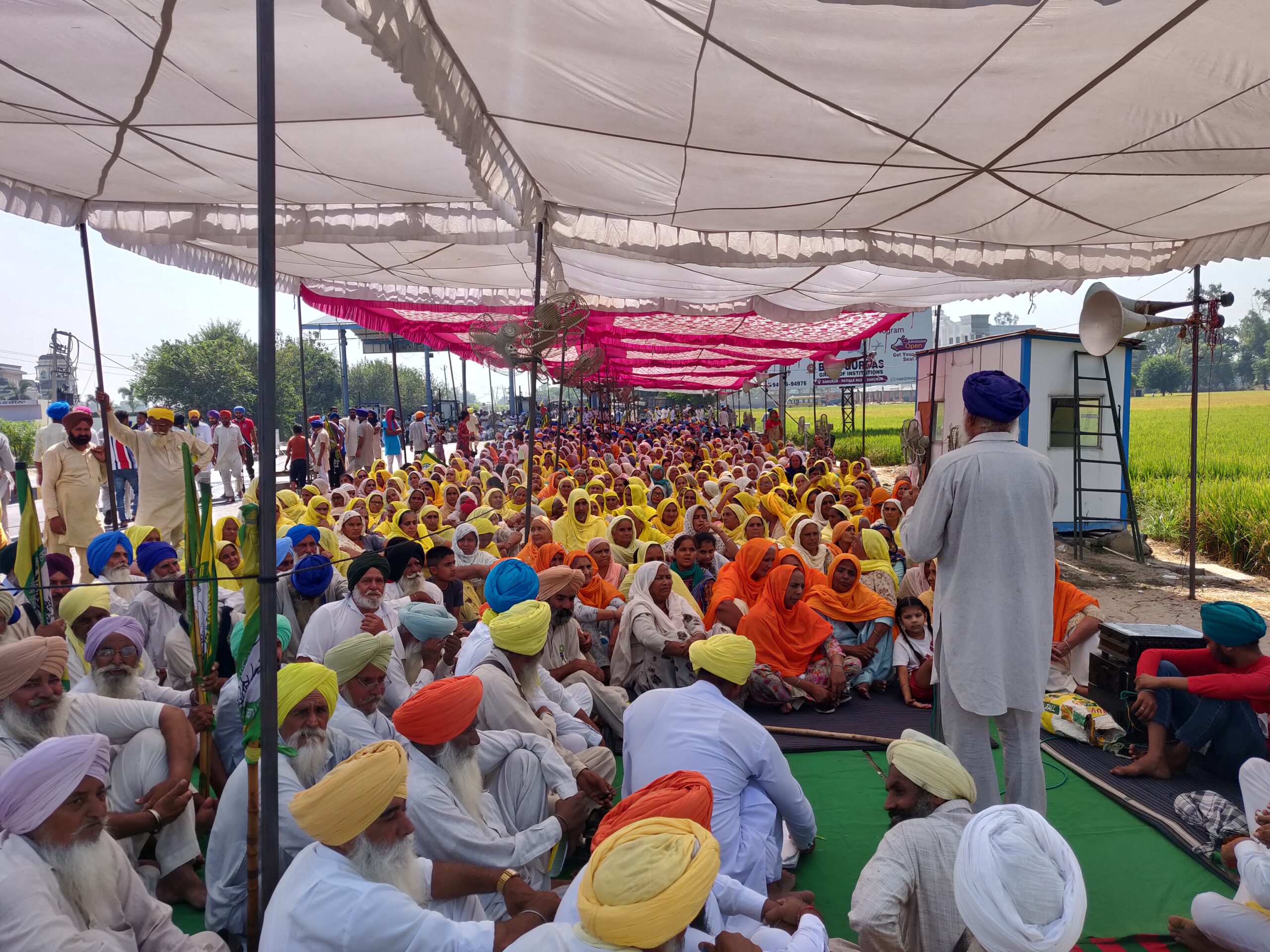
    Thousands of farmers have camped at the outskirts of Delhi and are demanding that the laws be repealed. They are largely from Punjab and Haryana — states benefitting the most from the existing agricultural marketing system. In a country where agriculture is a politically sensitive issue, the agitation has united the opposition against the government, portraying it as “anti-farmer”. Yet many of the political parties opposing the reforms have supported similar bills when they were in power.

    The first of the three bills facilitates contract farming by simplifying the dispute resolution mechanism between farmers and buyers. Contract farming is particularly beneficial to smallholder farmers, as it gives them access to quality inputs and reduces price volatility. The second bill removes stockpiling limits for certain commodities, allowing agro-processors to achieve economies of scale. The third bill abolishes the monopsony of Agricultural Produce Marketing Committees (APMCs) and is the main reason behind the ongoing protests.

    Many states, including Punjab and Haryana, established APMCs and affiliated market yards to provide farmers an assured marketplace to sell their produce in the face of uncertainties. Only APMC-licensed traders were allowed to purchase produce from farmers within APMC limits. This enabled the cartelisation of traders and prevented farmers from receiving a fair price.

    The new bill limits the operations of APMCs to their market yards and allows anyone from the private sector to purchase produce directly from farmers, bypassing the APMCs. This will hopefully allow farmers to avoid middlemen and APMC fees, give them more avenues to market their produce and provide them with better remuneration.

    Although policymaking on agriculture as a whole falls under the domain of states, the central government has justified the new laws citing its constitutional powers to regulate ‘interstate trade and commerce’.

    Punjabi and Haryanvi farmers are protesting because both states have strong networks of APMCs. The Indian government procures most of the wheat and rice grown in these states and compensates farmers at minimum support prices (MSPs). MSPs are announced by the central government seasonally and are significantly higher than domestic and international market prices. The procured grain goes into the Public Distribution System, providing food security for the bottom 67 per cent of India’s population.

    Punjabi and Haryanvi farmers benefit disproportionately from MSP procurement, dominated by wheat and rice. Only 6 per cent of Indian farmers avail MSPs. Yet over 90 per cent of the wheat and rice cultivated in Punjab is procured at MSPs. This assured procurement at above-market prices makes the state’s farmers the most ‘pampered’ in the country.

    Protesters fear that the new laws will wean Indian farmers off selling through APMCs, leading to the dismantling of the APMC–MSP regime, though none of the new laws mention that possibility. The protesters are also demanding a guarantee from the government to make MSPs mandatory for even private sale of agricultural produce. This is bad economics and unfeasible at current MSP levels.

    Farmers from Punjab and Haryana played a crucial role during India’s Green Revolution in the 1960s. MSPs were introduced to provide them a cushion for adopting new high-yielding varieties of crops. They also benefited from decades of state investment in building the best irrigation and road networks in the country. India, once dependent on foreign food aid, is now in food surplus and the second largest food producer in the world.

    This subsidies-based model of agricultural growth has come at a high price. Unchecked subsidies for artificial fertilisers have led to soil degradation across the country. Highly subsidised electricity for agriculture has resulted in the over-extraction of groundwater. Over 80 per cent of water consumed in the country is for agriculture. Owing to the MSP regime, India produces more rice than it consumes, but not enough other essential crops like pulses, oilseeds and fresh fruits to meet its nutritional needs.

    The new laws are an important step towards correcting distortions in India’s agricultural market and are essential for realising the government’s ambitious target of “doubling farmers’ incomes” by 2024. But the Modi government has stumbled in rushing the passage of the bills without building political consensus on the sensitive issue and garnering support from stakeholders. The central government has enabled fears and misconceptions about the laws to flourish among farmers, allowing the opposition and groups with vested interests to unite against the economic reforms.

    The protesting farmers are the richest in the country and do not represent the interests of and challenges faced by the average Indian farmer who stands to benefit from the reforms. Experts have proposed several measures to compensate affected farmers in the short run and enable a transition towards more sustainable agricultural practices. The Modi government must not relent and repeal the laws. Doing so will harm agriculture and dent the prospects of much-needed reforms in other areas.


    This article was originally published on East Asia Forum on 24 December 2020.
  • Introduction to Social Investing

    Introduction to Social Investing

    COVID-19 has brought the issue of sustainability into sharp focus across the world. Whether it’s the disproportionate impact of strict lockdowns on underserved groups or decrease in pollution levels because of the slowdown in economic activity, the pandemic has spurred a global dialogue on the socio-economic and environmental costs of continuing with ‘business as usual’.

    Finance is essential to propel the transition towards sustainability. UNCTAD has estimated an annual funding gap of USD 2.5 trillion in developing countries while OECD has estimated an equal deficit for developed economies. However, public resources are insufficient to fill this gap, and various sources of private capital need to be leveraged and channelised for the SDGs.

    Social investing, broadly defined, is a form of investing which takes into account the impact of investments on the society and environment. There exists a spectrum along which financial resources can be deployed to achieve social impact. On one end of the spectrum lies philanthropy, which hopes to achieve social good without an expectation of financial return. On the other end lie for-profit corporations that try to limit the negative effects of their activities on the society and environment. This spectrum, termed as the ‘continuum of capital’ by AVPN, represents an inherent tradeoff between social and financial returns, and the lines between the different forms of investing are becoming increasingly blurred.

    Philanthropy

    Philanthropy is a formalised and systematic process of doing good. Philanthropy in the social investing context usually involves the giving of grants by foundations (also known as trusts) to social purpose organisations (can be for-profit or non-profit) without expectations of financial return. Philanthropic capital may come from the wealth generated by families or business corporations.

    Given that philanthropic resources are minuscule compared to government funding for development, philanthropists are increasingly seeking to maximise the per dollar impact of their investments by augmenting government efforts through systems change initiatives. These include capacity building of public institutions, strengthening public service delivery, and policy advocacy.

    Impact Investing

    Impact investing usually involves investing in social enterprises with the expectation of some financial return. Social enterprises are for-profit businesses that primarily serve a social purpose. For example, a microfinance company which provides small loans to micro-entrepreneurs lacking access to traditional bank loans, or a dairy cooperative that procures, processes, and markets milk from smallholder women farmers. The customers and intended beneficiaries of an SE can be the same (first example) or separate (second example). 

    Impact investing lies in the middle of the continuum of capital, where there is a tradeoff between social and financial return. Social enterprises may choose to become more profitable at the expense of social impact or vice versa. The impact investment ecosystem is similar to that of regular startups and involves investors (e.g., angel investors, venture capital firms, and banks) and intermediaries (e.g., incubators and accelerators).

    Socially Responsible Investing

    Socially responsible investing usually involves investing in established companies (through shares and bonds) that follow responsible environmental, social, and corporate governance (ESG) practices. Such investing is also referred to as ESG investing. Environmental criteria for a company include pollution, energy use, waste; social criteria may include the treatment of workers, relationships with suppliers and stakeholders; and governance criteria refer to issues such as transparency in accounting and declaring conflicts of interest.

    The primary aim of ESG investing is to seek financial returns. Unlike philanthropy which lies on the opposite end of the continuum of capital, ESG investing aims to minimise the negative impact on the society and environment, instead of actively seeking positive impact.

    However, given that more than 90% of the economy will still exist after five years, it is important as investors to also engage with brown companies. These comprise the majority of the economy and promoting improvement in their operations can maximise investor impact.

    Other Mechanisms

    The forms of social investment described above are well-established and popular. However, many innovations are coming up in this space.

    Green Bonds are a special category of social investment that are getting increasingly popular. They are similar to government or corporate bonds which deliver fixed financial returns. Green bonds typically invest in long-term environment-friendly projects in areas such as green infrastructure, clean energy, and sustainable agriculture. Social Impact Bonds (SIB) and Development Impact Bonds (DIB) are other variants of traditional bonds that mobilise resources from governments and aid agencies, respectively, for results-based financial returns. 

    Obligatory religious charity such as zakat in Islam and tithe in Christianity can be channelised for funding development initiatives. Peer-to-peer lending is another innovative mechanism for funding social enterprises.

    Future of Social Investing

    Public funding for development is expected to decrease sharply post-COVID-19. Governments across the world are seeing their resources being stretched to cope with the pandemic and finance economic recovery measures. While COVID-19 is a setback for the development sector, it is also a clarion call for private investors to engage closely with global efforts towards the SDGs.

    Yet, there are signs of hope. ESG stocks outperformed markets during COVID-19. There is increasing demand for businesses to be more responsible towards their stakeholders, including customers, employees, suppliers, communities they operate in, and investors. The growing awareness and interest in sustainability is catalysing innovations in the sustainable investing space, making available an increasing number of avenues of investing for even retail investors like you and me. With the mainstreaming of social investing, the possibilities are endless.


    This article was originally published on the Social Investment Group (SIG) Blog.

  • Why Donating to PM-CARES Isn’t a Great Idea

    Why Donating to PM-CARES Isn’t a Great Idea

    In light of the ravaging coronavirus pandemic in India, PM Narendra Modi announced the creation of the Prime Minister’s Citizen Assistance and Relief in Emergency Situations Fund (PM-CARES) to deal with COVID-19 and similar emergencies in the future and provide relief to those affected by them.

    The initiative has received tremendous support from all quarters of Indian society including businesses, philanthropists, actors, sportspersons, government employees, and common citizens. Thousands of crore rupees have been contributed to the fund. However, it is yet unclear how the government plans to utilise the money.

    PM-CARES has attracted plenty of controversy since its launch. Critics have targeted the fund’s name, calling it “self-aggrandising.” The Opposition has questioned the rationale behind setting up a separate fund when the Prime Minister’s National Relief Fund (PMNRF) already exists to tackle such situations and holds a substantial unspent amount. These criticisms aside, I want to highlight a fundamental flaw behind the idea of donating money to the government during an emergency.

    My main concern with PM-CARES or any government-managed emergency relief fund is the centralisation of resources and spending authority. In a rapidly evolving situation like COVID-19 when new challenges emerge at the grassroots every day, local government administrations lack capacity and resources to effectively deal with them. By making public appeals to donate to PM-CARES, the union government is consolidating resources at the top without a plan to redistribute them where they are most urgently required. By the time it develops a mechanism for that, it may be too late.

    The civil society, in my opinion, is best suited to help provide emergency relief to the affected during such emergencies. This includes non-governmental organisations (NGOs) and volunteer groups which have deep roots in the communities they serve. Such organisations usually have a better understanding of community needs compared to even local government institutions. Civil society did a better job than governments in serving people in distress during the COVID-19 lockdown in India, providing them food and shelter.

    PM-CARES is attracting potential social funding for civil society organisations, limiting their ability to operate. It may be argued that without the prime minister’s passionate appeals, the society would not have donated so generously in the first place. However, he could have used his charisma for inspiring people to contribute to grassroots organisations doing good humanitarian work. If not that, at least local authorities such as district collectors could have been empowered to seek contributions for use local use.

    Another concerning fact is the inefficient utilisation of corporate social responsibility (CSR) funds which forms a large chunk of the total amount donated to PM-CARES. This includes multi-hundred crore rupee contributions by many prominent corporates. Such largesse during the emergency will no doubt earn them social and political goodwill in the future. However, instead of showing genuine social stewardship in the time of a crisis, they seem to have taken an easy way out.

    Instead of simply donating to PM-CARES, companies could have contributed CSR funds along with their managerial and technological expertise to NGOs solving problems on the ground. The lost opportunity is especially disappointing considering that most large corporates have access to networks of credible civil society organisations and have dedicated CSR teams in place to facilitate such engagements. Lumpsum donations to the fund are also expected to result in unavailability of grants to NGOs in the near future.

    It is highly unlikely that the government will involve civil society in the utilisation of PM-CARES. India lacks a culture of public-private partnerships for social good. Even if their interests may align, governments in India are averse to partnering with the NGOs for delivering public services such as education, healthcare, and various social benefits. This is unlike many developed countries where governments at all levels work hand in hand with the civil society to tackle community-level problems effectively and efficiently.

    There are various reasons for Indian governments’ aversion to partnering with civil society for public service delivery. An ingrained notion of a Mai-Baap Sarkar—a belief that the government alone is responsible for welfare of citizens—prevents governments from outsourcing the responsibility to external entities, despite their own inefficiencies. On the other hand, the NGO sector in India also suffers from an unflattering track record of corruption and misappropriation of funds. Bridging the divide between these two sectors will require establishing effective governance mechanisms to facilitate transparent collaboration.

    Given these systemic flaws, what should a common citizen do to contribute during COVID-19? Donating during a crisis is a noble deed and the society’s generosity will play a big role in helping the country cope with the pandemic. However, instead of funding the government, people should consider donating to credible NGOs which have the immediate capacity to make use contributions. There are many platforms to facilitate that. For public donations, the government should be the recipient of last resort during emergencies.

  • MAVIM: A Catalyst of Change

    MAVIM: A Catalyst of Change

    Mahila Arthik Vikas Mahamandal (MAVIM), a Government of Maharashtra organisation, has been relentlessly working for the socio-economic empowerment of women in the state through its widespread network of women’s self-help groups. The projects undertaken by the organisation have brought about a significant change in rural areas.

    25th October marked a special day for the Mahila Arthik Vikas Mahamandal (MAVIM) when various products made by women’s self-help groups (SHG) from Maharashtra were made available for purchasing on Amazon, India’s leading e-commerce marketplace. This was the result of a unique partnership between MAVIM and Amazon India’s Saheli platform which handholds women entrepreneurs to market their products online. The product launch took place during the Shakti: Corporate Summit, jointly organised by MAVIM and Sahabhag, the Social Responsibility Cell of Government of Maharashtra.

    The summit, held in Mumbai, was organised with an aim to leverage private sector support and expertise for women-led micro-enterprises in the state. Present dignitaries included Ms. Pankaja Munde, Minister of Women and Child Development and Mr. Yaakov Finkelstein, Consul General of Israel, as well as several representatives from the business community, Government, and civil society.

    MAVIM was founded in 1975 to bring about gender justice and equality for women, investing in human capital and the capacity building of women, thus making them economically and socially empowered and enable them to access sustainable livelihoods. It is a not-for-profit corporation of the state government under the aegis of Women and Child Development Department.

    MAVIM has done pioneering work in promoting microfinance and led the SHG movement in Maharashtra, leading to the formation of more than 1,14,000 SHGs till date. A vast majority of these SHGs is in rural areas. The unparalleled reach coupled with a strong grassroots connect has established MAVIM as a leading agent of social change.

    A typical SHG comprises 10 women from a village, including a leader, who is responsible for maintaining the group’s records. MAVIM handholds women in crucial stages of SHG formation, such as, organising members, formalising the group, and training members in regular procedures. Members contribute a fixed amount to the group as monthly savings.

    The corpus is held in a savings bank account of the collective. As need arises, members can borrow money from the corpus for domestic expenses, and repay it later at a small interest. Access to money can be tremendously helpful during emergencies, for example, a death in the family or for urgent medical treatment.

    Also, assurance of credit enables women to plan for significant foreseeable expenditures such as a wedding or education. In regions with limited access to institutional finance, these lending networks provide low-income individuals an alternative to extortive moneylenders, avert sale of assets in times of distress, and prevent households from slipping into poverty. This is the essence of microfinance.

    As groups gain experience and demonstrate savings discipline, MAVIM helps members undertake a wide variety of income generating activities suited for the pre-dominantly agricultural rural economy. Goatry, dairy, and poultry are the most popular vocations taken up by MAVIM women.

    MAVIM SHGs are also engaged in a number of other activities such as household food manufacturing, agricultural processing, garment manufacturing, jewellery making, and various service jobs. In addition to training and handholding, MAVIM supports SHGs with access to bank loans for livelihood activities as well as market linkages wherever possible. These activities not only supplement the primary source of income in the households (mostly farming), but also empower women, raising their status within the families and society.

    MAVIM’s interventions can be credited with bringing thousands of households out of poverty through women’s savings groups. A sign of success for microfinance in MAVIM is the changing nature of loans availed by its SHGs. It has been observed that as groups mature, the share of loans for livelihood-related activities goes up as against loans for consumption. The total amount in loans taken by MAVIM SHGs is ₹ 2,122 crore. MAVIM takes pride in the impressive repayment rate of 98% for loans availed by its SHGs. This affirms the notion that rural women are credible borrowers, and can be successful entrepreneurs.

    One of the key strengths of MAVIM is its vast network of grassroots organisations known as Community Managed Resource Centres (CMRC), which perform the role of local implementing agencies for MAVIM’s programmes. The CMRCs are the bridge between MAVIM and individual SHGs and cater to them with a wide range of services, including bank linkages and capacity building trainings. A CMRC is essentially a taluka-level federation of 200–250 SHGs.

    CMRCs were established as part of the Tejaswini programme (2007–2017), jointly funded by the International Fund for Agricultural Development (IFAD) and the Government of Maharashtra.

    Although MAVIM was instrumental in formation of the CMRCs, they are independent institutions registered under the Societies Act. This allows a CMRC to adapt to local conditions and generate additional sources of revenue to sustain its operations and possibly earn a profit for its members.

    Throughout the state, the CMRCs are engaged in small and medium-scale business activities which would be infeasible for individual SHGs, such as running dal mills, hatcheries, farm equipment lending centres, agriculture inputs stores, common facility centres, and trading and marketing of agricultural commodities.

    Despite their resilience, SHGs face persistent bottlenecks in scaling up their economic activities and transforming into sustainable businesses. These include lack of access to credit, relevant skills, and exposure to markets. In light of these challenges, the private sector can be a valuable partner for MAVIM and the thousands of women entrepreneurs associated with the organisation. Businesses can invest in women-led enterprises and make them a part of their supply chains. Businesses can play a vital role in strengthening these micro-enterprises by contributing expertise in technology, management, and marketing know-how, while benefitting from access to a network of thousands of hardworking women. Going beyond philanthropy, a business case can be made for organisations to get associated with MAVIM. In recent years, MAVIM has actively collaborated with for-profit organisations and created livelihood opportunities for rural women in various sectors including agri-business, banking and finance, retail, and clothing and apparel.

    MAVIM’s engagements with the private sector show the way forward for other development organisations working for women’s empowerment to thrive in the modern economy.


    This article was originally published in the December 2018 issue of Maharashtra Ahead.